Let's connect
Oops! Something went wrong while submitting the form.
Finance teams are stretched thinner than they have been in years. Roles stay open for months. Close deadlines don’t move. The workload keeps climbing.
To keep pace, more finance organizations are using two distinct tools: finance and accounting outsourcing and interim staffing. Three pressures are driving the shift. A deepening accounting talent shortage. Growing strain on existing finance teams. And a constant push for greater efficiency.
The data below shows how quickly this is playing out. And one pattern runs through all of it. Interim staffing now sits at the center of how modern finance functions operate.
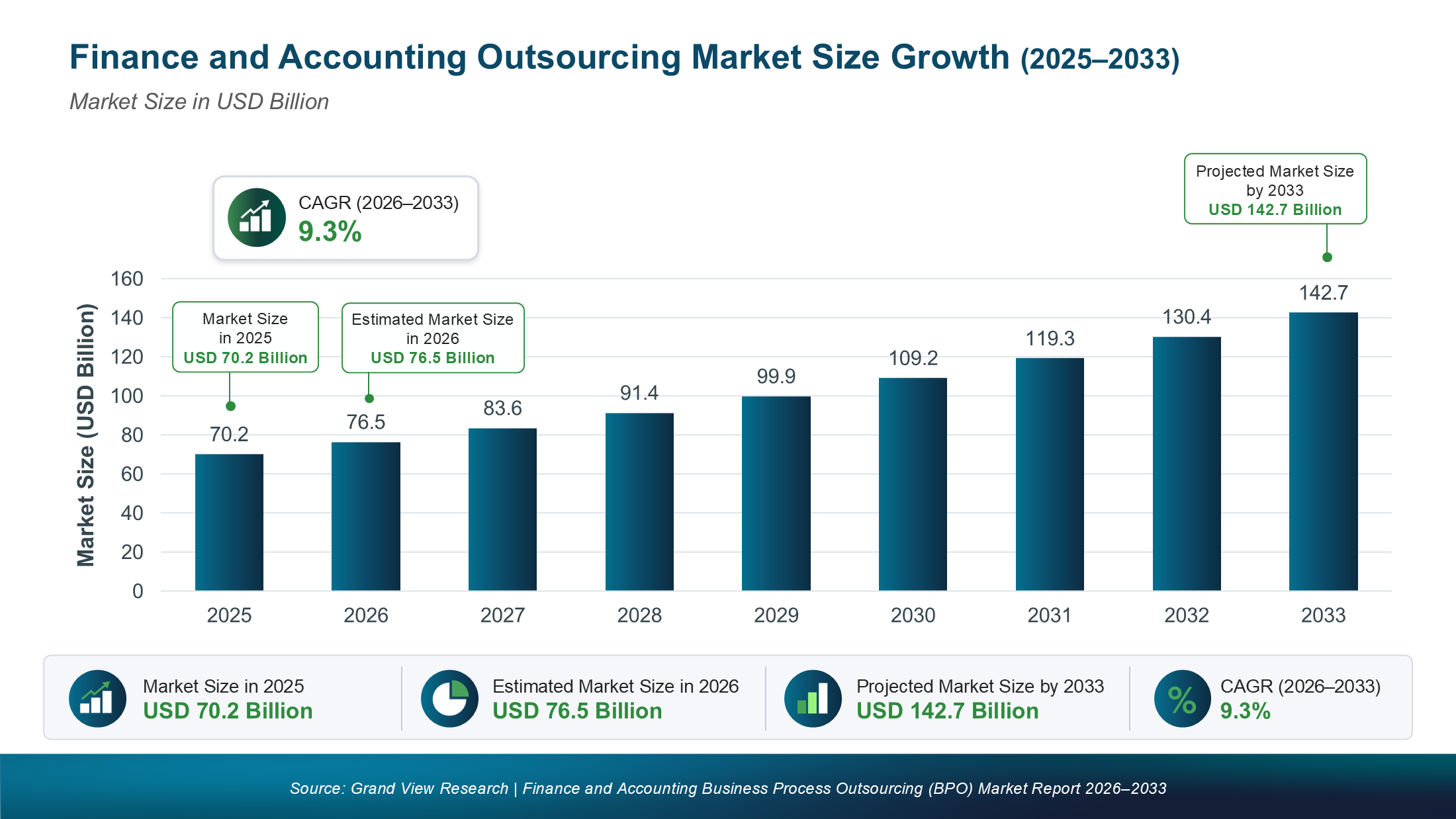
The finance and accounting outsourcing (FAO) market is expected to grow from around $59B in 2026 to more than $85B by 2031. Some forecasts put it above $140B by 2033.
But that growth isn’t coming from outsourcing alone. Companies are pairing outsourced services with interim accounting professionals to fill immediate skill gaps and keep finance initiatives moving. The two do different jobs. Outsourcing hands off an ongoing process to an outside provider. Interim talent plugs directly into your team for a defined stretch of time.
A few forces are pushing the demand:
63% of finance leaders plan to increase contract or temporary hiring. That number tells you interim staffing has outgrown its old reputation as an emergency measure.
Companies now bring in interim professionals on purpose, as part of the plan. They use them to bridge a hiring gap while a search runs, add capacity during a growth push, staff a special project like a system implementation or an audit, and cut the delay that comes with a full recruiting cycle.
The payoff is a finance team that can flex with the actual work, and a close that holds steady even when a key person leaves.
Start with the number that frames the whole trend: 87% of finance leaders report significant accounting talent shortages.
For a CFO or CAO, an understaffed team is a risk problem before it’s a workload problem. When you can’t hire fast enough, the exposure shows up more than just in the numbers:
Interim staffing gives companies a way to hold the line. An experienced interim accountant can step in within days, carry the workload, and keep the close and the controls intact while the search for a permanent hire continues. No long ramp-up. No months of lost productivity, and no surprises when the board or the auditors ask for the numbers.
That is why interim staffing has become one of the fastest ways to restore capacity while keeping real experience in the seat. You get someone who has done the work before, ready now.
Outsourcing often delivers 20% to 60% cost savings, and that math is a big reason the FAO market keeps growing. Interim staffing solves a different problem.
Cost is rarely the first reason a company hires an interim professional. Speed and coverage are. Finance leaders reach for interim talent when they need:
For a CFO, the real comparison is interim coverage against the cost of a vacant seat: a delayed close, audit findings, and the productivity lost while a search drags on for months. Outsourcing hands off a function. Interim staffing adds a proven person to your own team and does it fast.
AI is taking over a lot of repetitive finance work: reconciliations, data entry, first-pass reporting. That part is real, and it’s accelerating.
But automation doesn’t run itself. It raises the value of people who can direct it. Demand is climbing for professionals who can:
For a CAO, the accountability doesn’t move when the tooling changes. You still own the numbers the system produces, the audit trail behind them, and the controls around the model. That is exactly why experienced interim professionals get pulled into these projects. As finance teams automate, the people who can validate the output and stand behind it are getting harder to find and more valuable to hire.
Large enterprises still account for most of the FAO market, around 64% share. They have the budgets and the complexity that outsourcing and interim staffing were built for.
The fastest growth is happening lower down. Small and mid-sized companies are adopting interim staffing quickly, for reasons that are easy to understand:
For a mid-market finance team, one experienced interim hire can cover a gap that would otherwise stall the whole department, and keep a lean team out of the restatement and missed-deadline territory that gets a CFO called into the boardroom.
A few trends are clear from the data:
As talent shortages persist, automation spreads, and business transformation reshapes the finance function, companies are expected to keep increasing their use of interim accounting professionals. The finance team of the next decade will blend full-time staff, outsourced processes, and interim experts brought in exactly when the work calls for them.
CX, a Connor Group Company, is built to connect companies with elite finance and accounting talent on an interim basis. When you need an experienced controller, a technical accountant, or a project lead who can start now and deliver from day one, that is the gap CX fills.
If a hiring delay, a growth push, or a major project is straining your finance team, let’s talk about interim support that bridges the gaps.